
Search California Criminal Court Records
California criminal court records are kept by 58 Superior Courts across the state. Each county has its own court system. These records cover felonies, misdemeanors, and infractions heard in California courtrooms. You can search case info through online court portals that many counties now run. The California Department of Justice also keeps a statewide criminal history database with arrest and conviction data going back decades. Most criminal court records in California are public. Anyone can search them. Some are free online. Others cost a fee or need a visit to the courthouse where the case was filed.
California Criminal Court Records Quick Facts
How California Criminal Courts Work
California has 58 counties. Each one runs a Superior Court that handles all criminal cases in that area. There is no city or municipal court for criminal matters. If someone gets arrested in any California city, the case goes to the county Superior Court. This is true for felonies, misdemeanors, and even minor infractions. All criminal court records are held at the county level. The Judicial Council of California oversees the whole system, but each court keeps its own case files. You must go to the court where a case was filed to get copies or view records. Under California Rules of Court Rule 2.503, the public can view most criminal case records, though some types of cases can only be viewed at the courthouse and not online.
The California Courts website at courts.ca.gov explains public access rules and how to submit records requests to any Superior Court in the state.
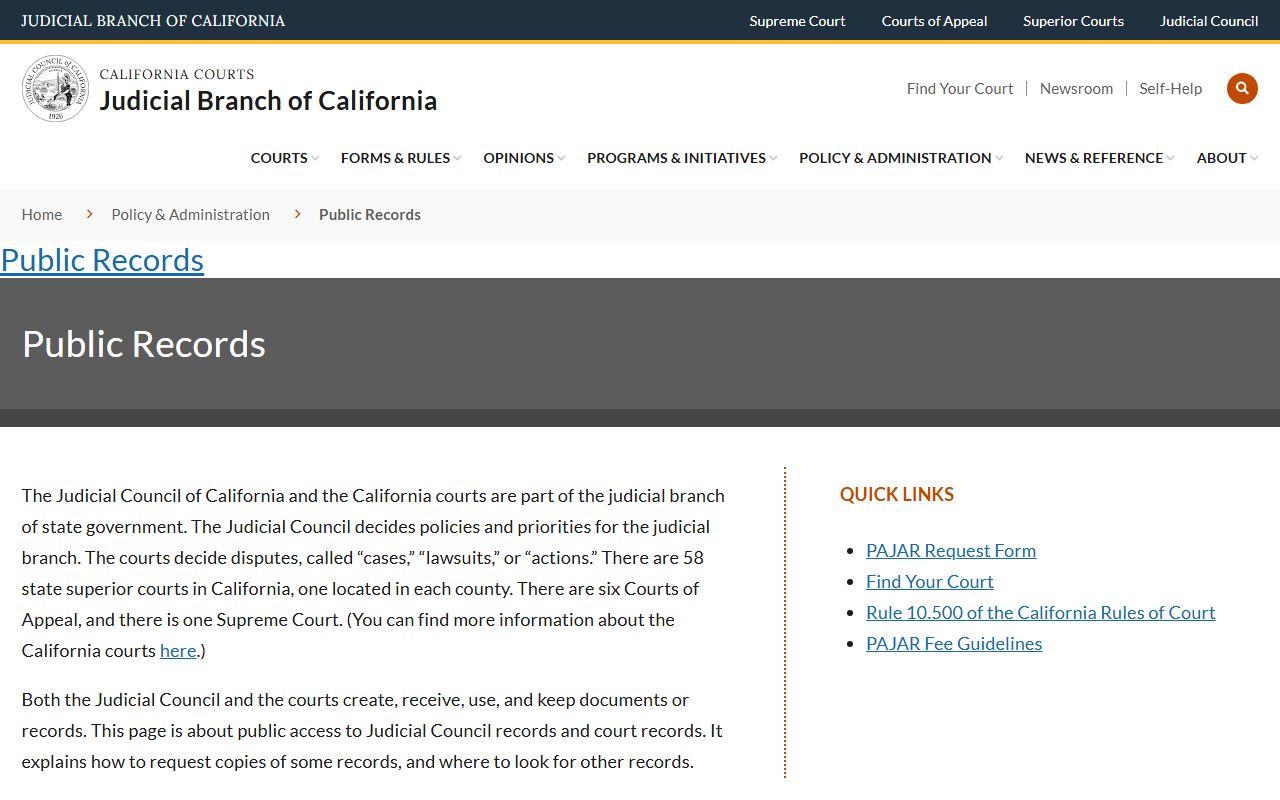
That page covers what criminal court records you can get, how to make a request, and the fees involved. Copying costs about 10 cents per page for Judicial Council records. Court case records have their own fee schedule. Fees vary a bit from county to county. You can reach the PAJAR office at 415-865-7796 or email PAJAR@jud.ca.gov for questions about judicial records in California.
Not sure which court you need? The Find My Court tool helps you search by county name or zip code.
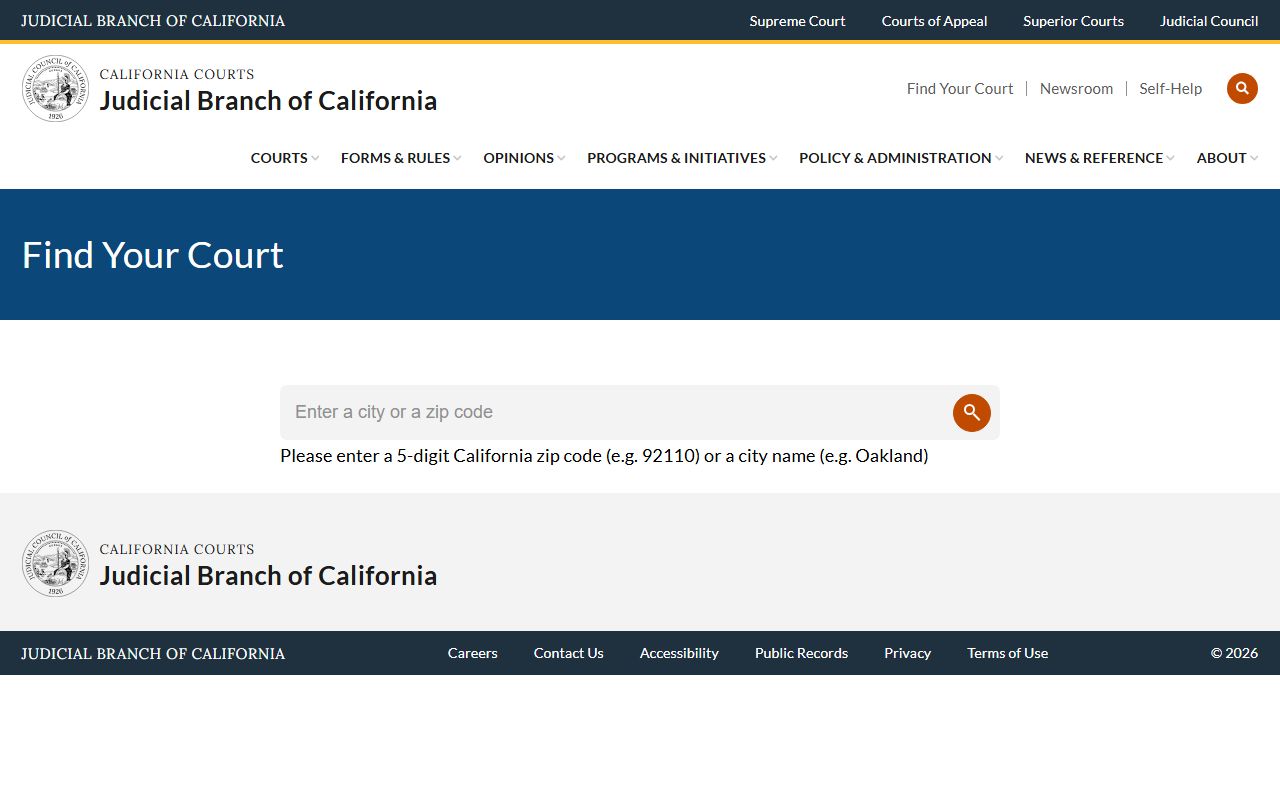
Type in your location and the tool shows the court address, phone number, and hours. This is the quickest way to find the right Superior Court for criminal court records in California.
Find California Criminal Court Records Online
Most California Superior Courts now have some form of online case search. The exact tool depends on the county. Many use the Tyler Odyssey platform. Others have custom portals built for their court. A few of the smallest counties still need you to call or show up in person. Online portals let you search by name or case number. Results show the case type, filing date, charges, and hearing dates. For criminal cases, you can usually see the register of actions and court calendar online. Full case documents in criminal matters are often limited to in-person viewing at the courthouse. This follows California Government Code Section 6254, which sets certain exemptions from public disclosure for things like active investigation files.
The self-help guide at selfhelp.courts.ca.gov walks through how to get copies of any court record in California, step by step.
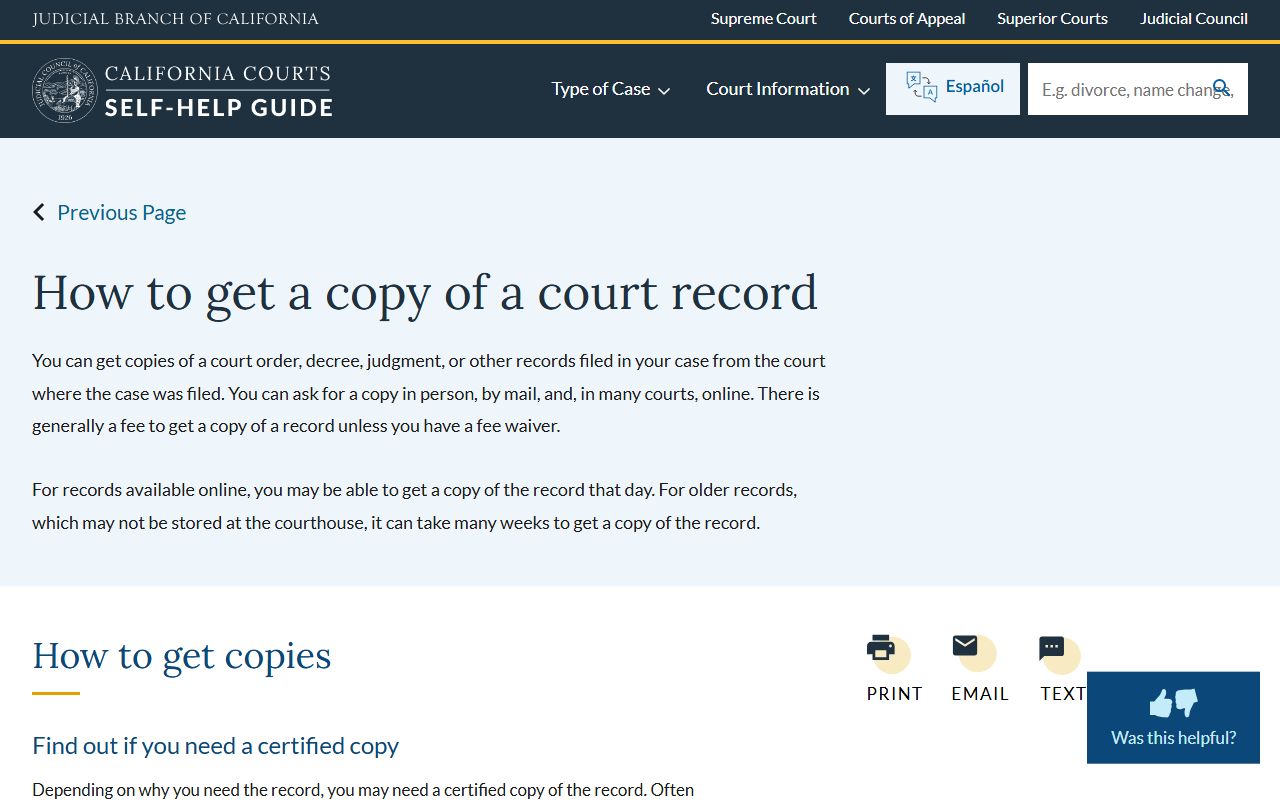
Plain copies cost $0.50 per page at most courts. Certified copies run $40 per document. If the clerk spends more than 10 minutes looking for your record, a $15 search fee kicks in. Records stored off-site cost an extra $10 to pull. For online records, you may be able to get copies the same day. Older records that have been archived can take weeks. As of January 2026, a new law (AB 1524) lets people use their own phone or camera to photograph electronic court records at the courthouse in California.
Note: Sacramento County has dropped all online search fees, making it one of the few California courts where criminal case data is free to view.
California DOJ Criminal History Checks
The California Department of Justice runs the state criminal record database. This is separate from the county court system. The DOJ collects arrest and disposition data from police departments, sheriff offices, district attorneys, and courts across California. They compile this into RAP sheets. A RAP sheet is a record of arrest and prosecution. It shows every arrest, charge, and case outcome tied to a person's fingerprints. Under Penal Code Section 11105, the DOJ must maintain state summary criminal history information. This includes names, dates of birth, physical descriptions, fingerprints, arrest dates, arresting agencies, charges, and dispositions.
Access to these records is restricted. Only authorized agencies can pull someone else's criminal history for employment or licensing purposes. Over 45,000 agencies are approved to do this in California. The DOJ processes about 2 million state-level background checks each year. Most results go back to the requesting agency within three business days. The background checks page at oag.ca.gov/fingerprints explains the whole process.
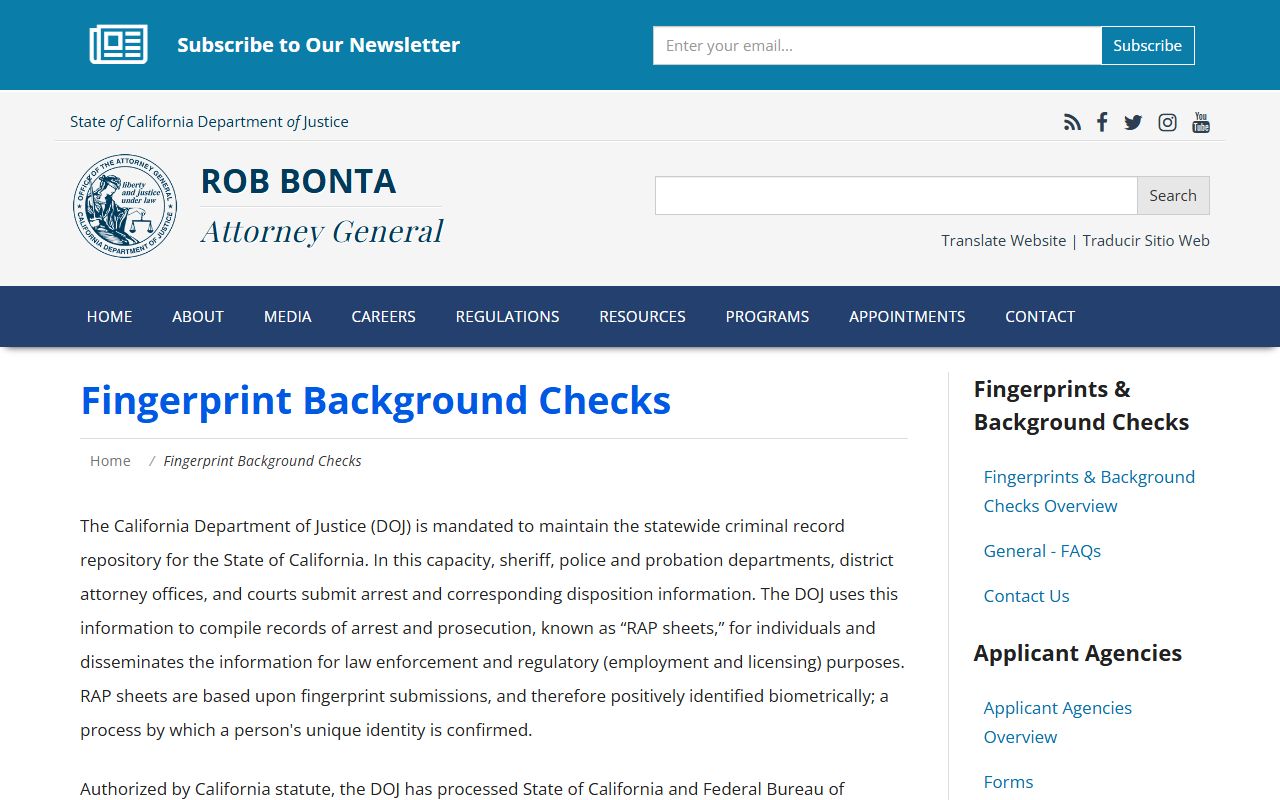
That page covers how employers and licensing agencies start a background check through the Live Scan system. The process begins with Form BCIA 8016. Applicants go to a Live Scan site to have their fingerprints taken electronically. The prints are sent to the DOJ for comparison against the criminal history database.
You have the right to see your own criminal record in California. Penal Code Sections 11120 through 11127 give every person the right to request a copy of their own criminal history for review. Third-party requests are not allowed through this process. The DOJ record review page at oag.ca.gov/fingerprints/record-review has the full instructions.
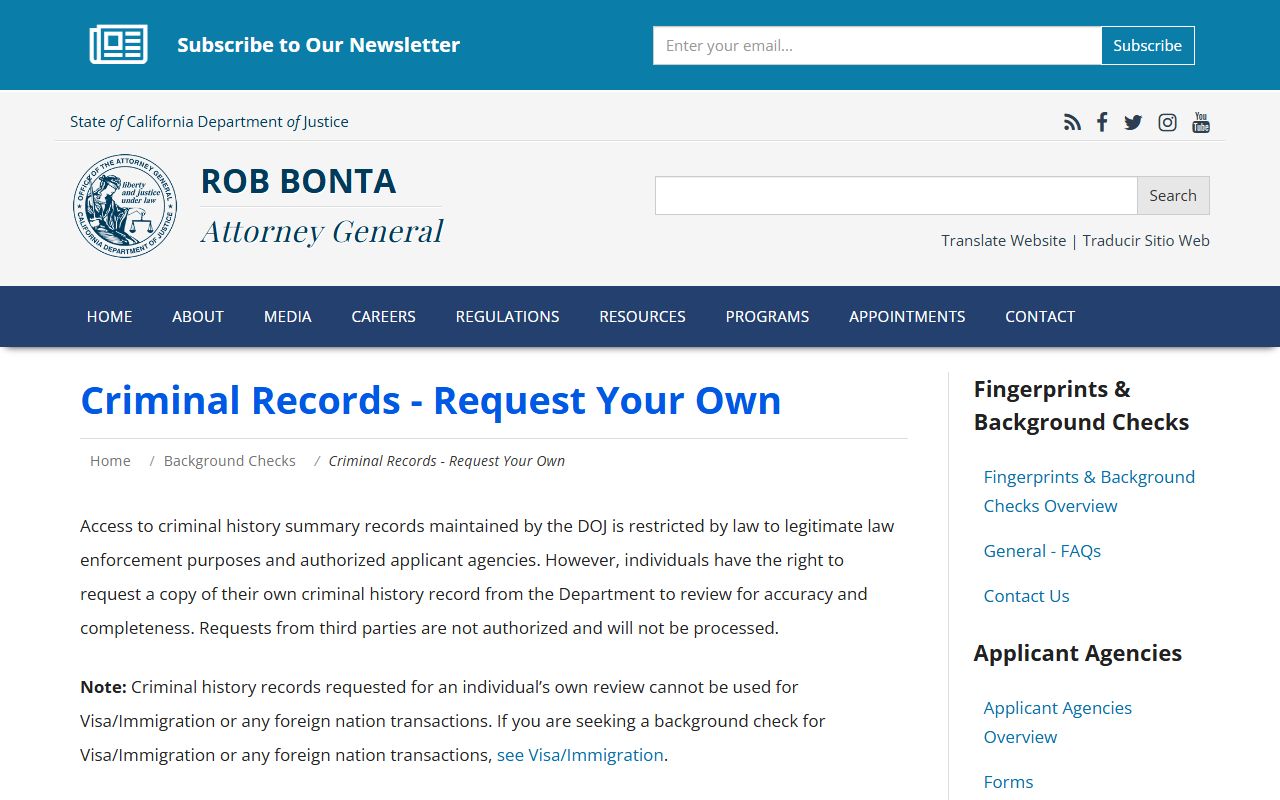
California residents fill out Form BCIA 8016RR. Check "Record Review" as the application type. Take the form to a Live Scan site. The DOJ fee is $25. People who live outside California must mail in fingerprint cards on Form FD258 to the DOJ Bureau of Criminal Identification in Sacramento. Under Penal Code Section 13300, local law enforcement agencies also keep their own criminal history records. Contact the local police department or county sheriff for those.
Criminal Record Request Status in California
After you submit a request, you may need to follow up. The DOJ has phone numbers and email addresses for each unit. The full contact list is at oag.ca.gov/fingerprints/contactus.
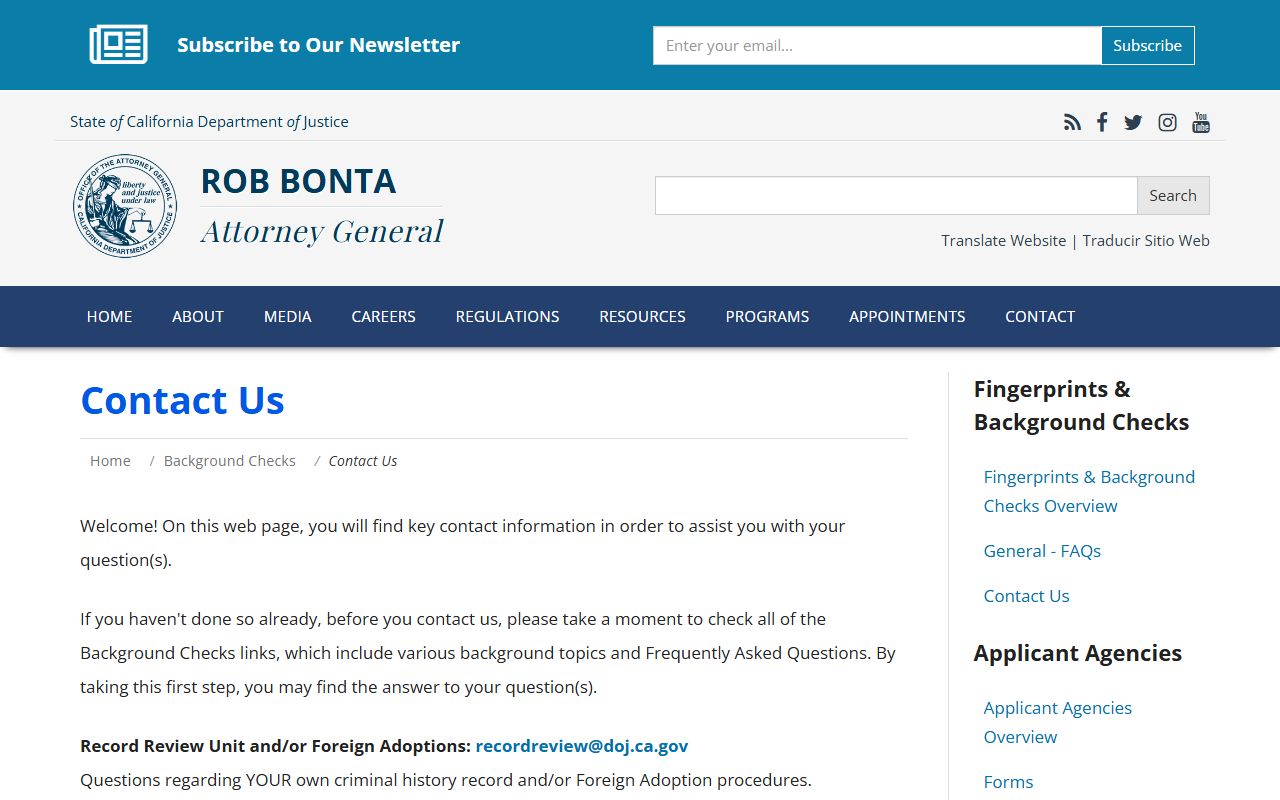
Call the Record Review Unit at (916) 227-3849 for questions about your own record request. You can also email recordreview@doj.ca.gov. For Live Scan problems, reach out to livescansupport@doj.ca.gov. The billing unit handles payment issues at (916) 227-3870. These are all part of the California DOJ's Bureau of Criminal Identification and Analysis.
You can check your background check status online at applicantstatus.doj.ca.gov.
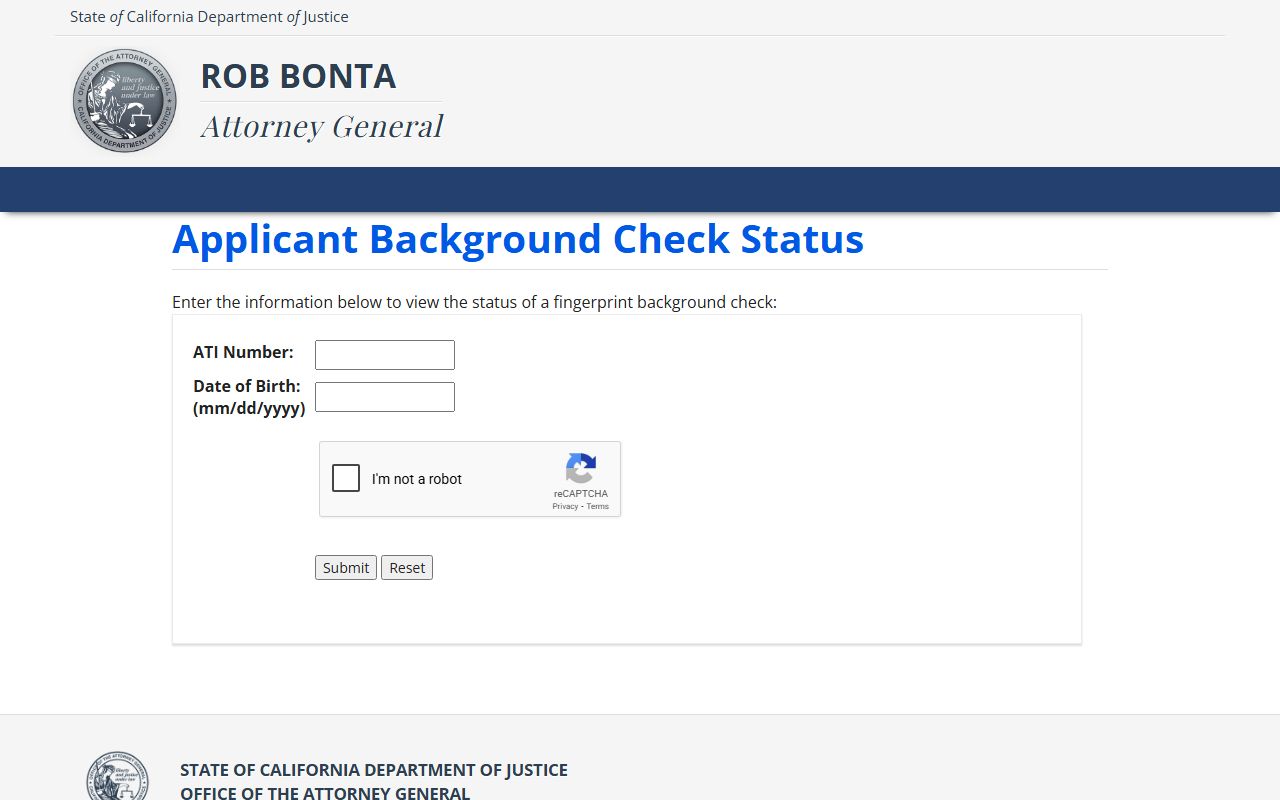
This tool shows if your criminal record request is still being processed or if results have been sent. Most checks finish within three business days. When the DOJ needs to review fingerprints by hand, they send a delay notice. Manual reviews happen when prints are unclear or when an arrest record needs extra verification. The DOJ offices are open Monday through Friday, 9:00 a.m. to 5:00 p.m., excluding state holidays.
California Prison and Criminal Records
The California Department of Corrections and Rehabilitation keeps records on everyone in state prison. This is a different source than the DOJ or county courts. CDCR data covers people serving time in a state facility or recently released from one. The main number is 916-324-7308. The Identification Unit can be reached at (916) 445-6713 on weekdays from 8:00 a.m. to 4:30 p.m.
Search the CDCR inmate database online at ciris.mt.cdcr.ca.gov. This is the California Incarcerated Records and Information Search.
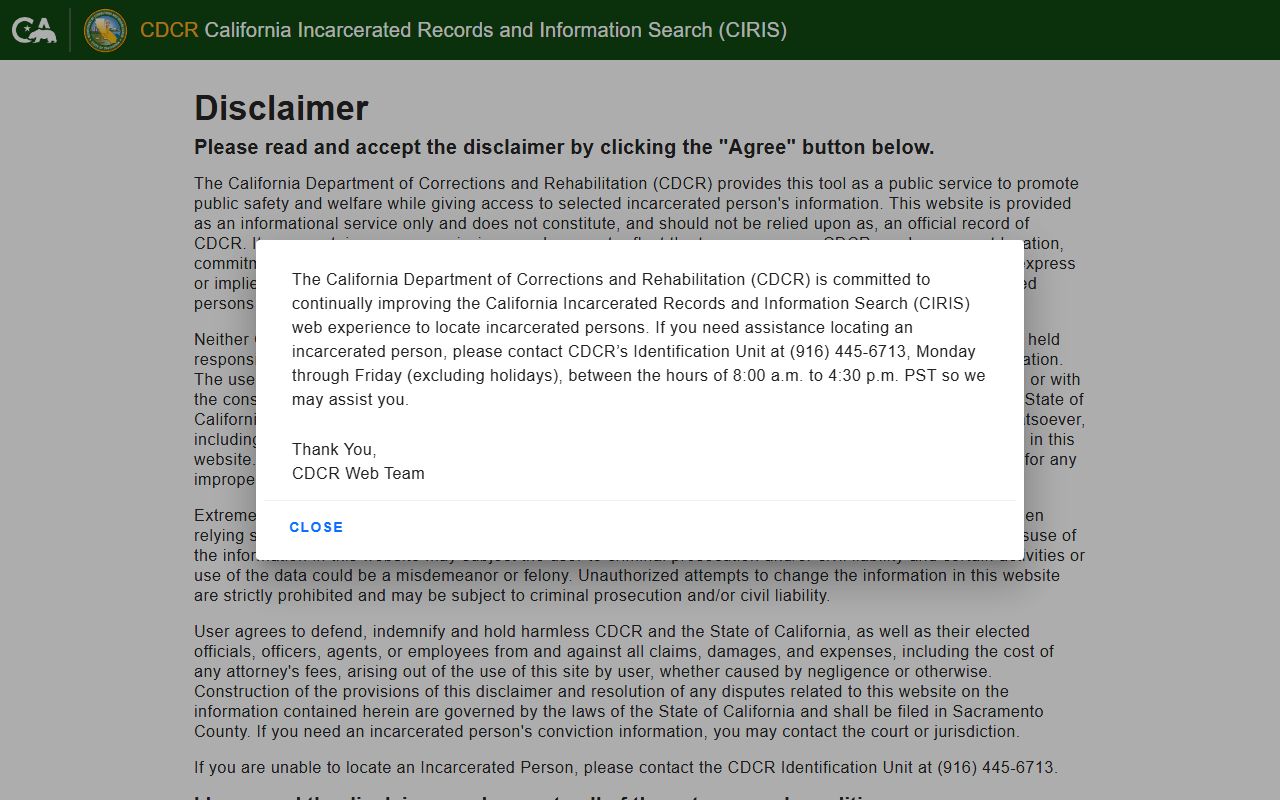
Results show the inmate name, CDCR number, age, current facility, commitment counties, admission date, and Board of Parole Hearing dates and outcomes. You can search by name or CDCR number. For more formal records requests, CDCR has a public records portal. County jails are separate from state prisons. Contact the county sheriff for local jail inmate lookups. Many California counties run their own online inmate search tools through the sheriff's office.
Note: CDCR records only cover state prison inmates, not people held in county jails or on probation in California.
Criminal Court Record Fees in California
Fees for criminal court records in California follow a state schedule set by the Government Code. Most courts charge the same base rates, though some add local fees on top. Here is what you can expect to pay at most California Superior Courts:
- Plain copies: $0.50 per page
- Certified copies: $40.00 per document plus $0.50 per page
- Search fee (clerk search over 10 minutes): $15.00
- Off-site record retrieval: $10.00
- Comparison with original document: $1.00 per page
- DOJ criminal history review (own record): $25.00
These come from California Government Code Sections 70626 and 70627. Online document downloads may have different pricing. San Diego County charges $7.50 flat for the first ten pages and $0.07 per page after that, with a $40 cap per document. Los Angeles County charges 50 cents per page for copies and $25 for certification. Sacramento County dropped all online fees. Every county is a bit different. Always check with your local court for the latest California criminal court record fees.
Fee waivers may be available if you have low income. Ask the court clerk about filing an In Forma Pauperis request to waive record fees.
California Criminal Record Laws
Several state laws control who can see criminal records and what happens to them over time in California. The public can view most criminal court files. But state law also gives people ways to clean up their records after a case is done. These options can change what shows on a background check.
Under Penal Code Section 851.8, a person who was arrested but never convicted can petition to have their arrest record sealed and destroyed. This applies to people found factually innocent. The petition goes to the law enforcement agency that made the arrest and then to the court. If granted, the arrest is removed from the person's record as though it never happened. This is an important protection in California criminal court records law for people who were wrongly arrested.
Expungement works through Penal Code Section 1203.4. After someone finishes probation, they can ask the court to dismiss the conviction. The judge reopens the case, sets aside the guilty plea or verdict, and enters a not guilty plea followed by a dismissal. This does not erase the record from the court file. It changes the status. Expunged cases may still appear on some background checks but with a note that the case was dismissed. Both sealing and expungement affect California criminal court records in different ways, and the process starts with a petition to the court where the case was heard.
Browse California Criminal Court Records by County
Each county in California has a Superior Court that keeps criminal case files. Pick a county below to find local court contact info, online portals, and resources for criminal court records in that area.
View All 58 California Counties
Criminal Court Records in Major California Cities
All criminal cases in California go through the county Superior Court, not a city court. But each city has its own police department or contracts with the county sheriff for law enforcement. Pick a city below to find which county handles criminal court records for that area.